- Expeditions
- Short Bike Tours
- Sportive Events
- Trekking
- Mountaineering
- Tours in Tibet
- Tours Kamchatka
Unsorted List
































Our bikes
Current touring bikes |
 |
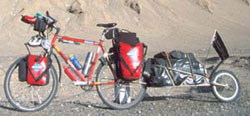
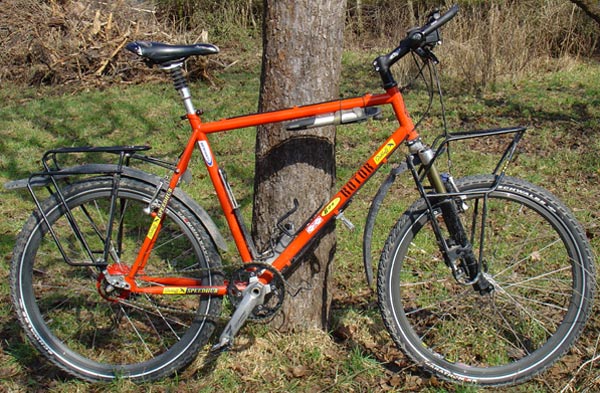
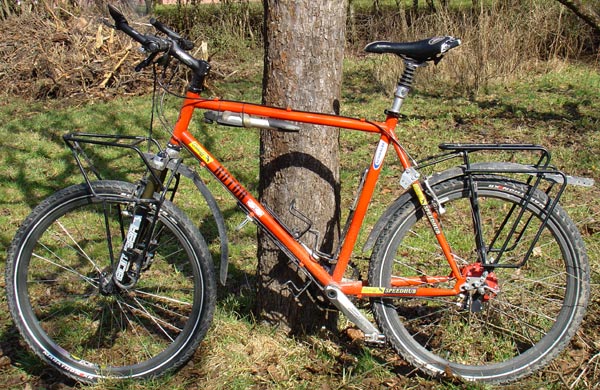
| Andy's
bike Name: "Westwind" 
|
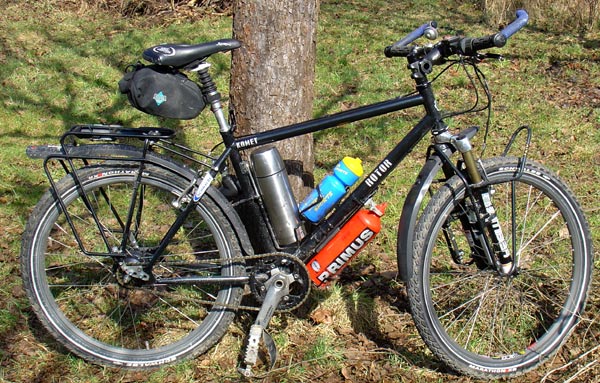
Waltraud's
bike Name: "Dunkle Schneewolke" 
|
 |
 |
 |
 |
 |
 |
frame:
steel frame from Rotor
Bikes, based on the model 'Komet' bike trailers: BOB ibex, Extrawheel |
|
Things that broke |
|
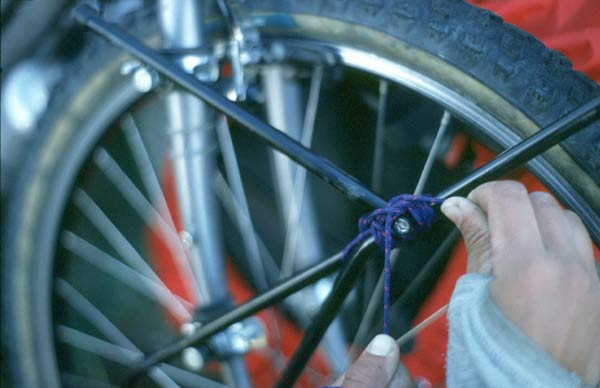 This front rack did not survive the trip to Mongolia. It broke at the joint and we fixed it with some rope. |
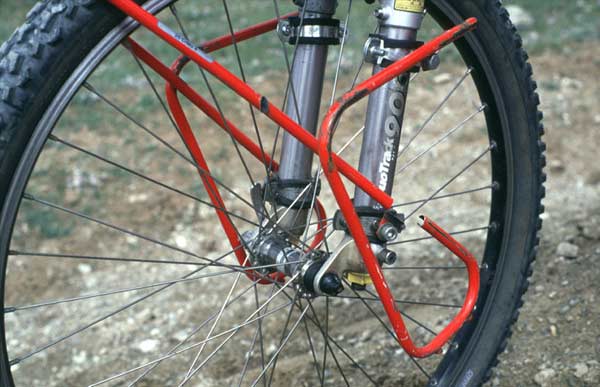 This front rack also did not survive the Mongolian roads - we traveled with self-made ones afterwards, and now use the Faiv Hoogar in combination with suspension forks. |
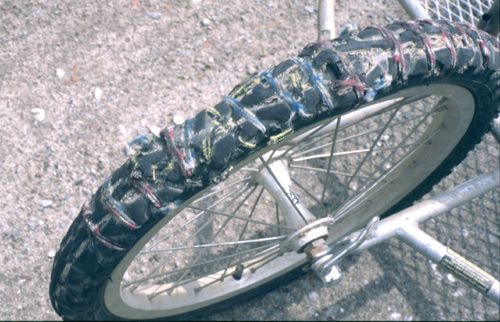
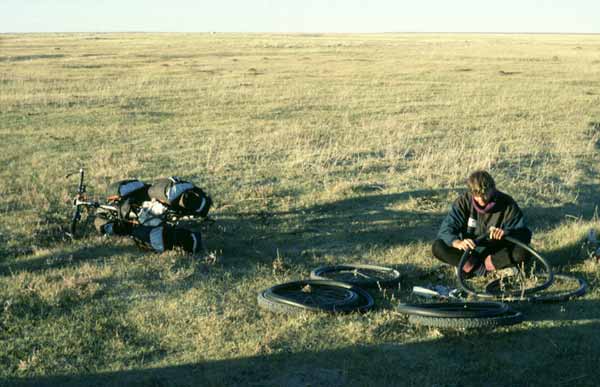 Flat tires - there are a few on almost every tour, usually not a big deal. However, in the Mongolian steppe we had 4-at-a-time (small hard thorny seeds of some plant). |
|
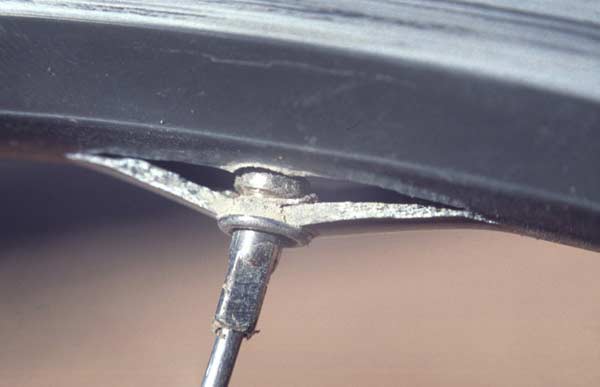 Rim Mavic 517 - not suitable for touring. After 4000 km through Namibia and Botswana the spokes ripped out of the rim. |
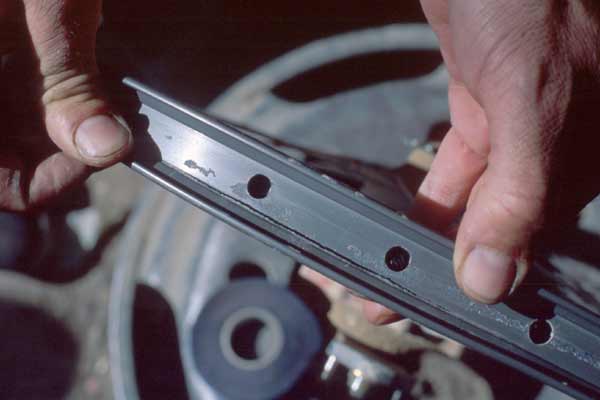 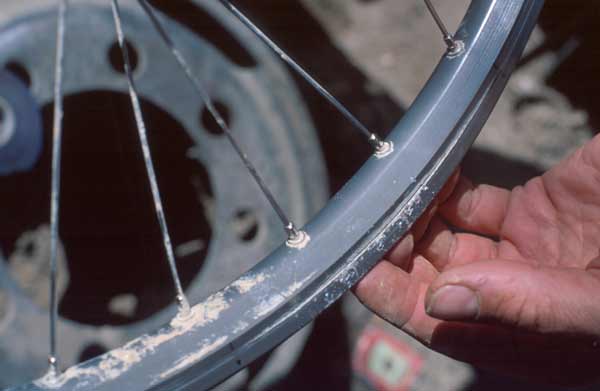 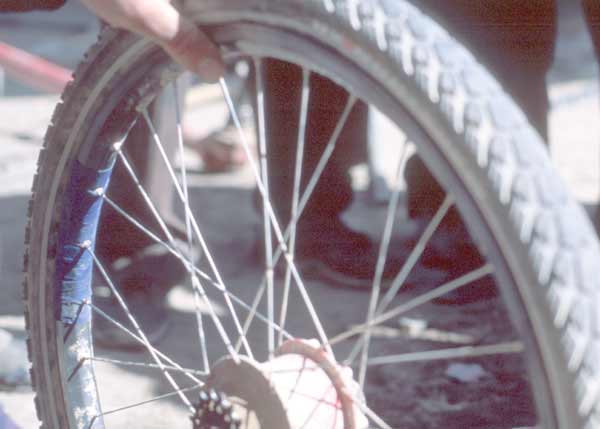
Rim Mavic EX721 - it cracked open after 2000km (Tibet). We managed to tape it and it was good for 700 km, then it cracked on the oppoite side as well - more tape then... |
Bike packing strategies |
|
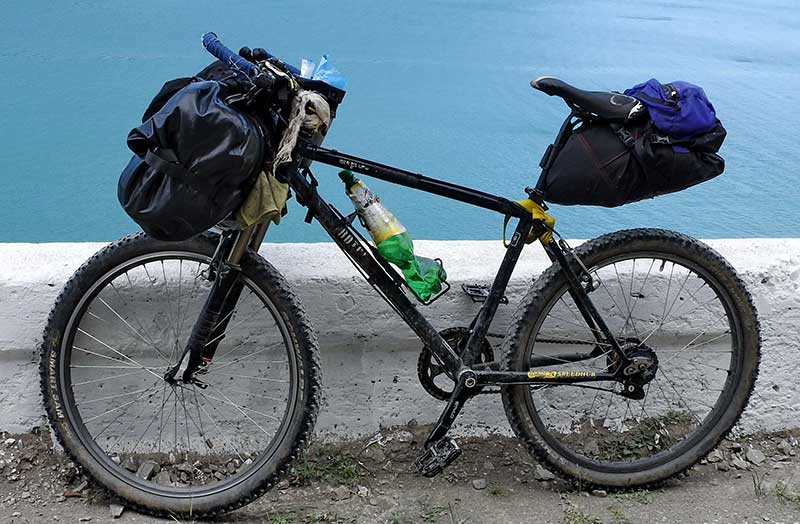
| Bike-packing
setup: Front roll, saddle bag plus small back pack |
||
| Front
and rear panniers plus rack-pack on both bikes |
||
This
is the classic way of bike packing. Its advantages are that the bicycle
remains flexible and easier to carry. Depending on the amount of stuff
added on top of the rear rack, riding stability may suffer. And, well,
this is how we went before we knew the trailers... |
||
| Front
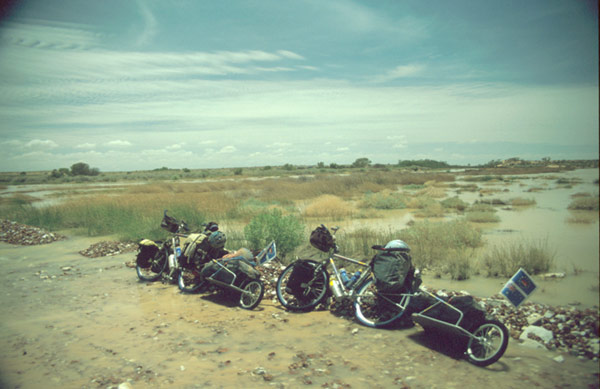
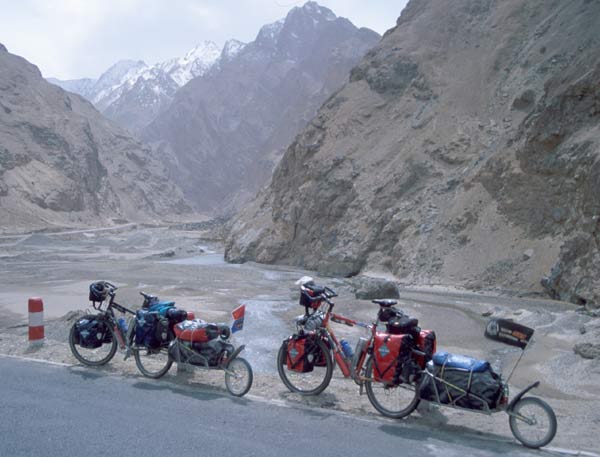
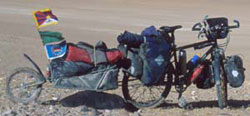
and rear panniers for one bike, front panniers and trailer for the other bike |
||
| A
modification of the "classic" way, which adds the trailer
instead of rear panniers to one of the bikes. The combination of front
panniers and trailer is quite nice, as the low center of gravity results
in a very good riding stability also on small trails and mountains. |
||
| Front
and rear panniers plus rack pack for one bike, front and rear panniers and trailer for the other bike |
||
| The
trailer increases the capacity of stuff that can be taken along, while
the center of gravity of the loaded bike remains lower than with huge
stacks on the rear rack. This system is of advantage when traveling
to places where not much food or water is available. |
||
| Front
and rear panniers plus a trailer on each bike |
||
| This
is for long trips to regions where lots of water or food needs to
be transported |
||